AI Is Quietly Rewriting How Money Moves
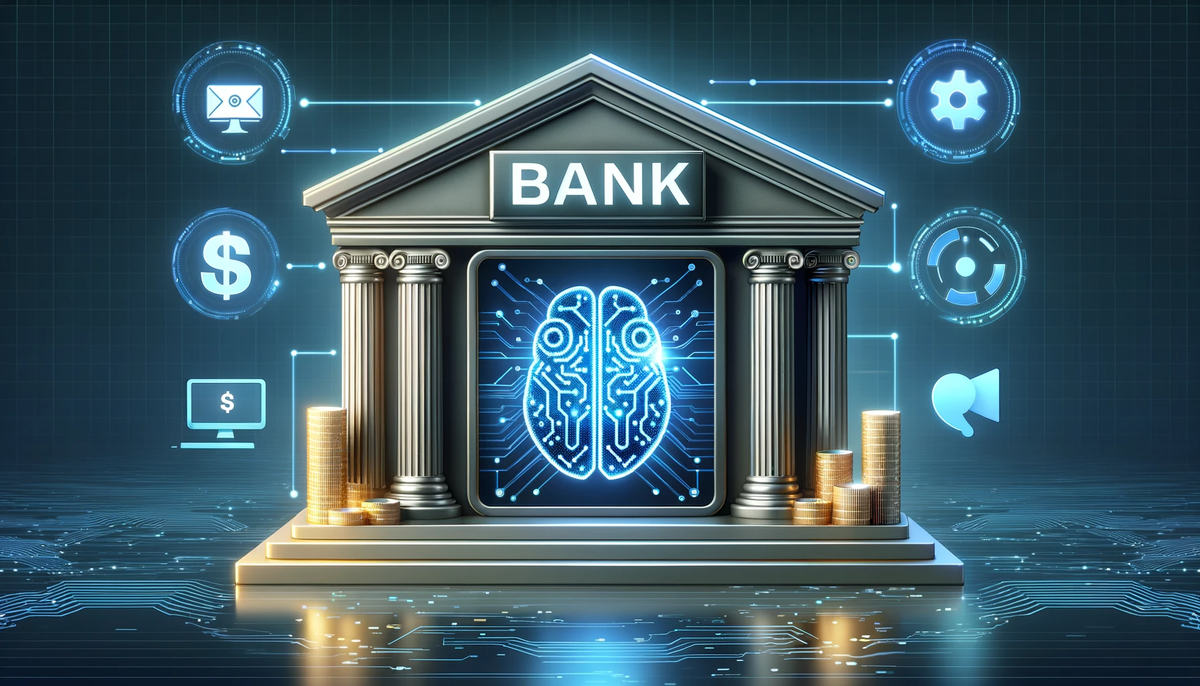
Money hasn’t stopped moving. Salaries still hit bank accounts on time. Credit cards still swipe. UPI payments still clear in seconds. On the surface, the financial system looks exactly the way it did a few years ago.
But underneath that familiar flow, something fundamental has changed. Decisions that were once made by loan officers, risk teams, and compliance analysts are now being made by AI models—quietly, continuously, and at a scale no human team could ever manage. The shift hasn’t been loud or dramatic. There were no app redesigns or public announcements that screamed “AI takeover.” Yet across banks and fintechs, AI has slipped into the core of how money moves.
AI has become an invisible intelligence running the financial world.
Over 70% of global banks now use AI or machine learning in at least one core function, with credit scoring and fraud detection leading adoption
Credit was the earliest and most natural place for AI to take control. For decades, loan approvals relied on static rules: credit scores, income proofs, repayment history, and a checklist of documents. These systems worked, but they were rigid, slow, and blind to nuance.
AI models changed that equation by looking beyond fixed inputs. Instead of asking only who you are on paper, they observe how you behave financially. Transaction patterns, income consistency, spending habits, repayment behavior, even timing patterns now feed into real-time credit decisions.
The result is credit that adapts rather than waits. Loan approvals happen in minutes instead of days. Credit limits adjust dynamically based on behavior rather than annual reviews. Pricing reflects live risk, not outdated assumptions. This shift powers everything from BNPL products and instant credit cards to SME loans where cash flow matters more than collateral.
Credit today has become hassle-free and seamless, exactly what today's generation appreciates it.
AI-driven credit models can reduce loan approval times from days to minutes, while improving default prediction accuracy by 20–30% compared to traditional rule-based systems.
If we talk about payments, every tap, swipe, or UPI transfer now passes through an AI checkpoint before it completes. While consumers see a transaction succeed or fail, behind the scenes an AI system has already evaluated it in milliseconds.
These systems don’t just look for obvious red flags. They analyse anomalies, behavioural biometrics, device patterns, location signals, and transaction history to decide whether an action “fits” the user. A sudden high-value transfer at 3 a.m., a card swipe in a new country, or an unusual spending pattern can trigger real-time intervention.
Fraud is rising precisely because payments have become faster and more digital. Humans simply cannot keep up with the volume and speed of modern transactions. AI isn’t just helpful here—it’s essential. Without automated detection and scoring, fraud teams would be overwhelmed before the day even begins.
In payments, AI isn’t a back-office tool anymore. It’s has become the official gatekeeper.
False positives in AML and fraud monitoring account for nearly 90% of flagged transactions in legacy systems.
If credit and payments are visible to consumers, compliance is where AI is quietly doing its most important work. Anti-money laundering, know-your-customer checks, and transaction monitoring are expensive, complex, and heavily regulated. Traditionally, they relied on large teams manually reviewing alerts—many of which turned out to be false positives.
AI changes the economics entirely. Instead of blanket rules that flag everything suspicious-looking, models learn patterns of genuine risk. They identify unusual behavior across networks, not just individuals. They prioritize alerts based on probability rather than volume, drastically reducing noise.
For banks, this means faster investigations, fewer unnecessary blocks, and lower compliance costs. For regulators, it means cleaner reporting, better audit trails, and fewer systemic blind spots. Given the scale of fines and regulatory pressure, this is where AI delivers its most tangible return on investment—even if it never gets the spotlight.
Regulators are playing their role too! This shift hasn’t gone unnoticed by regulators. There’s an inherent tension at play: financial institutions want speed and automation, while regulators want transparency and accountability. AI models, especially complex ones, are often accused of being black boxes.
That’s where explainable AI and model risk management come in. Banks are increasingly required to understand not just what a model decides, but why. Regulators aren’t resisting AI—they’re adapting to it, setting frameworks that demand interpretability, governance, and human oversight.
The conversation has moved from “Can we use AI?” to “How do we use it responsibly at scale?” That’s a sign of maturity, not hesitation. and the regulators are equally contributing to the new normal.
Regulatory fines related to AML and compliance failures have crossed $40 billion globally over the last decade, making AI-driven monitoring less of a choice and more of a financial necessity.
What this means for banks and fintechs, you may ask!
well, for financial institutions, AI delivers clear advantages. Costs drop as automation replaces manual processes. Risk management improves with real-time decisioning. Customer experience becomes smoother, faster, and more personalized. In competitive markets, this edge compounds quickly.
But there are trade-offs. Over-reliance on models introduces new risks. Data quality becomes mission-critical. Ethical concerns around bias and fairness require constant attention. And as AI becomes central infrastructure, failures become systemic, not isolated.
The winners will be those who treat AI as a core system—governed, tested, and evolved continuously—not as a bolt-on feature.
To summarise the whole article!
AI is no longer just another layer in financial services. It’s becoming infrastructure, much like databases, payment rails, and networks once were. It decides who gets credit, which transactions go through, and what regulators see.
The banks and fintechs that embed AI deeply into their operations will move faster, operate safer, and scale cheaper. Those that hesitate won’t fail loudly. They’ll simply fall behind—quietly, transaction by transaction.
And in a system where money never stops moving, quiet shifts are often the most powerful ones.
See you in our next article!
If this article helped you know the inclusion of AI in finance, check out our recent stories on Genz's new obsession, Perplexity's dominance, Wearable AI boom, GPT Store, Apple AI, and, Lovable 2.0. Share this with a friend who’s curious about where AI and tech industry is heading next. Until next brew☕