AI Learning Is Taking Off — And It’s Leaving Schools Behind
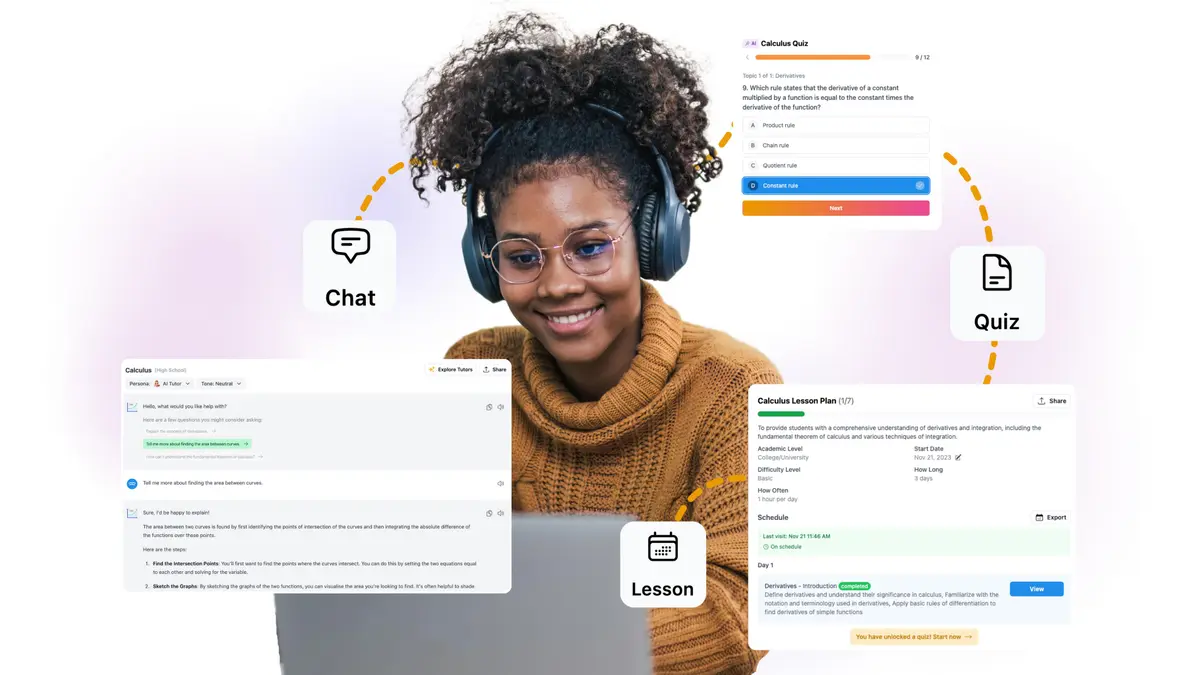
Classrooms today look much the same as they did a decade ago: desks in rows, a chalkboard or whiteboard at the front, a teacher speaking, students scribbling notes. On the surface, nothing has changed. But beneath that familiar exterior, a silent revolution is unfolding. Around the world, students are increasingly turning to personalized AI tutors — digital tools that know their strengths, their weaknesses, the pace at which they learn best, sometimes better than any teacher possibly can.
These AI tutors aren’t loud. They don’t make headlines. They simply work — quietly, privately, and often outside school hours. Yet their growth is rapid, relentless, and increasingly hard to ignore. As adoption spreads, they are quietly reshaping what “learning” means — and what schools, with their fixed curricula and rigid timetables, may soon struggle to match.
Imagine a student, let’s call her Riya, stuck on a tricky algebra problem late at night. In the past, she might have rummaged through a heavy textbook, searched for a tutorial video, tried to follow it — only to end up more confused. Or she might have waited for her next class to ask the teacher.
Now Riya opens an AI-powered tutor on her phone, types the problem, and the tutor walks her through the solution step-by-step — asking clarifying questions, offering alternate methods, adjusting difficulty based on her answers. Within moments, Riya understands the concept. She then asks the AI to turn her class notes into mini-quizzes, practices them a couple of times — and feels confident to move ahead.
Or consider Sameer, a high-school student who struggles when teachers speak too fast and lessons are one-size-fits-all. His AI tutor senses slower responses, simplifies explanations, switches to a more visual style, adds small tests to reinforce memory — essentially adapting to his mood and learning rhythm.
These are not fancy video lectures or passive MCQ-based modules (the hallmark of early EdTech). These are adaptive, responsive, personalized — built for the individual, not the average. And that matters. Because every student is different.
AI tutors do more than deliver content. They simulate what a private tutor might offer: pacing tailored to the student, explanations matched to understanding, instant feedback, and repetition until mastery. That’s the gap between EdTech 1.0 static videos and quizzes — and what’s unfolding now: a quiet revolution powered by intelligence, not distribution.
The scale of this shift is becoming hard to dismiss. As of 2025, the global AI-in-education market — including AI tutors, adaptive learning systems, and virtual facilitators — is estimated to be around USD 7.57 billion, with many forecasts projecting this to balloon over the next decade.
At the same time, the specific segment for AI tutors is growing rapidly. According to a recent market study, the global “AI tutors” market was worth about USD 1.63 billion in 2024, and is expected to expand at a compound annual growth rate (CAGR) of roughly 30–31% through 2030.
These aren’t niche numbers. They show a strong, structural shift. More institutions are adopting AI-backed tools, and more students are using them. One report estimates that a majority of educational institutions worldwide — particularly in regions with high digital penetration — are piloting or using AI-powered learning platforms, with student adoption rates reaching 70%+.
In short: demand is rising fast. The technology is ready. And the market is catching up.
As AI tutors gain ground, governments around the world are wrestling with what to do. The reaction is uneven, fragmented — and often undecided.
In the U.S., the federal education authorities recently issued guidance allowing schools to deploy AI tools — but with guardrails. AI must support, not replace, teachers. Privacy, transparency, equity and human oversight are mandatory.
Contrast that with proactive experiments in other parts of the world. In the UAE, for example, governments recently approved the inclusion of AI in school curricula — introducing students (even at early ages) to AI fundamentals, ethics, and usage, aiming to build “AI literacy” for the future.
There are even signs that education ministries in parts of Asia and the Middle East may leapfrog the cautious Western approach — betting big on AI-enabled classrooms, adaptive learning and hybrid teaching models.
On the flip side, privacy advocates and regulators in Europe warn about data protection, bias, and over-reliance on automation. For many governments, the balance between promise and risk remains elusive.
Result? A patchwork world. In some countries, AI tutoring is being quietly integrated. In others, it's banned or restricted. And in schools everywhere, uncertainty is growing.
The rise of AI tutors isn’t just a story of students and governments. It’s a seismic shift for traditional EdTech companies too. Platforms built on video lectures, recorded content, MCQ quizzes and static curricula — once the backbone of modern learning — are now facing a fundamental challenge.
Companies that once thrived on repackaged content are seeing that AI can generate personalized content at a fraction of the cost. AI reduces the marginal cost of creating lessons, automates content updates, cuts down teacher-content production cycles — and potentially boosts margins.
Some established players are adapting. They’re launching tutor-mode AI, experimenting with adaptive learning flows, or integrating intelligent-tutoring features. Others are scrambling to reinvent their business models. Because when content becomes cheap and personalization becomes automated, the real value shifts to user experience, data, rapid adaptation and trust.
For investors and education visionaries, this isn’t a minor pivot. It’s the birth of a new EdTech paradigm — one where scalability is no longer about video catalogue size, but about intelligence.
Despite the promise, schools — especially in developing regions — are struggling to keep up. Infrastructure remains uneven: many lack reliable internet connectivity, computers or even basic digital devices. Teachers are often not trained to integrate AI tools meaningfully.
Even where devices exist, curricula remain rigid. Exams, assessments, grading — all built around traditional models. AI-enabled learning breaks that mold. It demands flexibility, continuous assessment, adaptive pacing. That’s not a small ask in institutions built on compliance, uniformity and standardisation.
Moreover, many schools are wary. They worry about data privacy, unequal access, dependency, and even the risk that AI might replace human connection — something educators value deeply.
In short: while AI tutors grow quietly outside school walls, the institutions inside are still catching up.
If adoption continues, the next ten years could reshape education completely.
Imagine AI systems that track long-term learning behaviour: when a student struggles, the tutor adjusts the pacing; when they master a concept, the tutor reinforces it later. Imagine hyper-personalized curricula — not “Class 10 Mathematics,” but “Riya’s Math Path: tailored to her strengths, her pace, and her goals.”
Imagine AI co-pilots for teachers — automating repetitive tasks, generating custom assignments, analysing class performance, highlighting students who need extra attention. Parents get real-time analytics on their child’s learning progress. Schools evolve from rigid factories into adaptive learning ecosystems.
Already, pilot experiments and research hint at this future. In low-bandwidth regions, AI tutors accessible via basic smartphones or even messaging apps are delivering tangible learning gains, levelling the playing field for students who never had access to good teachers.
What’s happening now is more than just a trend. It’s the early phase of a transformation that could redefine education globally.
AI tutors are scaling faster than any education reform in memory — and often outside public view. What began as a helper tool for a few is now becoming a silent force that could outgrow traditional schooling itself.
If schools don’t adapt — by upgrading infrastructure, rethinking curricula, training teachers, and embracing flexibility — students may soon learn more outside the classroom than inside.
The silent education revolution has already begun. And unless institutions wake up, they risk being left behind.
See you in our next article!
If this article helped you explore AI learning, check out our recent stories on Wearable AI boom, GPT Store, Apple AI, Runway AI, Lovable 2.0 and MAI-IMAGE 1. Share this with a friend who’s curious about where AI is heading next. Until next brew☕