Microsoft’s Bold Bet on Creativity
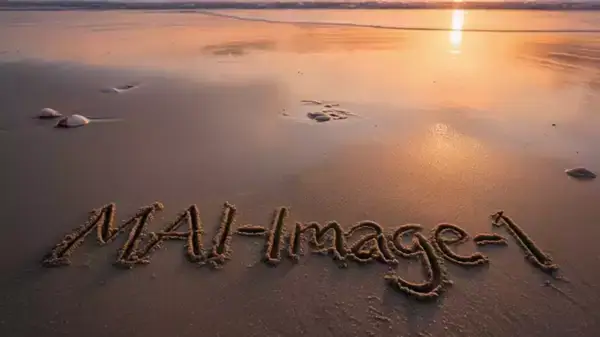
Earlier this year, Microsoft quietly dropped something that could change how we create visuals forever — MAI Image 1, its first in-house AI image-generation model. If you’ve used Copilot to generate images before, you were actually relying on OpenAI’s DALL-E behind the scenes. That meant Microsoft was pushing the creativity but not building the engine. Now, that changes.
This shift is huge. When a company like Microsoft — powering Windows, Office, Azure, and enterprise tools everywhere- builds its own image AI, it’s not just to play around with artwork. It’s a signal that visual AI isn’t a novelty anymore; it’s becoming infrastructure. And MAI Image 1 is already off to a strong start, debuting in the global Top-10 image models on LM Arena, outperforming several models that have been in the game much longer.
According to a 2025 McKinsey Global Survey, 88 percent of organizations say they use AI in at least one business function — up from 78 percent the year before.
So what makes it special, you ask? There are already tools doing wonders in image generation, right? Yes, you are right, well, not exactly right though. See, we are talking about Microsoft. And if it plans to build its own image generation infrastructure in spite of being the largest shareholder of OpenAI(ChatGpt's parent company), there's already a differentiation being offered for sure.
For starters, it's the ability to follow instructions precisely. Not just “generate a cyberpunk city,” but “give me a cyberpunk city with a red neon sign in Japanese on the left, raindrops visible on the camera lens, and a character in a yellow jacket walking away.” Most AI tools still mess up the fine details — fingers, text, reflections — but MAI Image 1 delivers much more control. It gets the designer’s thought process.

And Microsoft is not stopping at just making pretty pictures. They designed the model to fit seamlessly into tools we already use daily. Think of someone working on a pitch deck — instead of browsing stock photos for hours, they type what they need, and MAI creates the perfect asset right inside PowerPoint. Think of a marketer who is thinking of redesigning a product background for a social campaign, who can now pull it off without calling a design team. A small business owner can instantly generate photos of a product that doesn’t physically exist yet. Creation becomes instant, flexible… and free from design bottlenecks.
But, the real magic is in how the model blends creativity with enterprise-level control — something most image-generation tools still struggle with. While many AI models can produce beautiful visuals, they often hallucinate details: brand logos become distorted, fonts change shapes, colors vary across images, and product labels morph into unrecognizable patterns. That’s perfectly fine for individual creators experimenting with fan art… but not for a Fortune 500 brand spending millions on marketing consistency.
MAI Image 1 is being built for that exact gap. Microsoft wants enterprises to treat AI-generated visuals the same way they treat official brand templates — precise, repeatable, and compliant. Companies will be able to train the model using brand-approved colors, packaging shots, and layout rules. This means you can literally command: “Generate 50 campaign variations — keep the product label pixel-perfect, enforce this exact color palette, and only change the background theme.” The AI becomes a creative assistant that respects brand identity instead of reinventing it every time.
And the real differentiator? Microsoft owns every layer of the tech stack — the model, the hardware (Azure), the integration channels (Copilot, Windows, Microsoft 365), and enterprise governance tools. Unlike others who rely on third-party APIs or inconsistent safety layers, Microsoft can offer end-to-end control: secure training, IP protection, and sensitive data that never leaves the organization’s boundary. It’s not just better images — it’s creative automation that enterprises can finally trust.

The technical leap for Microsoft is bigger than a new model release — it’s a shift in how the company wants creativity to work in the future. Until now, depending on external models like DALL-E meant Microsoft could innovate only as fast as its partners allowed. Costs, performance upgrades, even critical product decisions were influenced by someone else’s roadmap. By developing its own stack with MAI Image 1, Microsoft now controls everything — from the GPUs inside Azure that run the model to the final images people generate inside Copilot. It’s a complete vertical takeover of the creative workflow, and it signals one thing: Microsoft is preparing for a world where generating visuals is as common as typing in Word or analyzing a spreadsheet in Excel.
And that control translates into better output. Something as fun and simple as creating a children’s book becomes a technical challenge with most AI tools — the characters’ look shifts from page to page, or small details completely change. MAI Image 1 treats consistency like a first-class feature. If a creator wants the same character to appear throughout the book, the AI remembers the details and keeps them intact. The same goes for personal likeness. Upload a handful of selfies, and the model can recreate you in dozens of scenarios — astronaut, cricketer, Marvel-style hero — without losing your identity along the way. For influencers, educators, and everyday creators, it removes the frustration of “almost right” results.
But behind every feature is a much larger strategy unfolding. Generative visual content is exploding — every brand, every creator, every app wants some piece of it. And the major players are positioning themselves as the backbone of that new content economy. Google has Imagen. Adobe has Firefly. OpenAI has DALL-E. For Microsoft to enter this arena and debut directly in the Top-10 ranking is a loud statement: it’s not here to catch up, it’s here to lead. And because Copilot already sits inside Windows, Teams, Edge, and Office — tools people use daily — MAI Image 1 is quietly positioned to become the most used visual AI model on the planet without anyone needing to install something new.
The AI image generator market is projected to grow from USD 8.7 billion in 2024 to USD 60.8 billion by 2030 — a compound annual growth rate (CAGR) of 38.2%
This all leads to a shift in who gets to create. What once required a full design team, paid stock images, or advanced software can now be accomplished with a single sentence. A college student polishing slides for a project, a social media startup building ad campaigns overnight, a teacher designing illustrations for tomorrow’s class — they’re no longer limited by tools or skills. The power to translate imagination into visuals is moving into everyone’s hands. And Microsoft knows that when the world embraces AI for creativity, the platform enabling that shift will shape the next era of computing — and it wants that platform to be theirs.
If that’s very, very clear to you, MAI Image 1 isn’t just another image model — it’s Microsoft rewriting who gets to be a creator in the first place.
See you in our next article!
If this article helped you explore MAI Image 1, check out our recent stories on The Future Banker — Personetics, Dialogue AI, and Gumloop AI. Share this with a friend who’s curious about where AI is heading next. Until next brew ☕