No Code. No Team. No Time. Just Lovable 2.0
Imagine building a full-fledged web app simply by chatting — no long nights of coding, no plumbing backend servers, no wrestling with deployment. Just you, an idea… and a prompt. That’s exactly the leap the Swedish startup behind Lovable claims to deliver with its latest version: Lovable 2.0.
If you’re a designer, entrepreneur, student, or small-team founder — or just someone with a decent idea but zero coding knowledge — this might be one of the most exciting tools you’ll encounter.
Companies’ use of low-code and no-code tools have steadily increased over the past decade — and now AI’s convergence with these tools will change how apps are built, who builds them, and how fast it happens.” — Jason Beres, SVP of Developer Tools at Infragistics (2025)
From startup dreams to first line of code: that’s the romance of Lovable 2.0. You begin by describing what you want: “A simple CRM for my small business, with login, customer list, task tracking.” The AI listens, builds the frontend and backend, sets up a database (using Supabase), and even readies authentication. The moment is magical — your app takes shape as you type.
But Lovable isn’t just another “toy code generator.” With 2.0, it introduces serious upgrades:
- A smarter Chat-Mode Agent that helps you plan features, debug workflows, or alter logic — without autopatching your code headlessly. The agent thinks in steps: reads logs, checks database connections, and suggests fixes. This feels more like pairing with a thoughtful junior engineer than patchworking a template. trickle.so+1
- A Dev Mode for those who want parity with “real code.” Once Lovable builds the core, you can step in, view the actual codebase, tweak logic or UI, and still stay within the overall framework. Lovable AI Insights+1
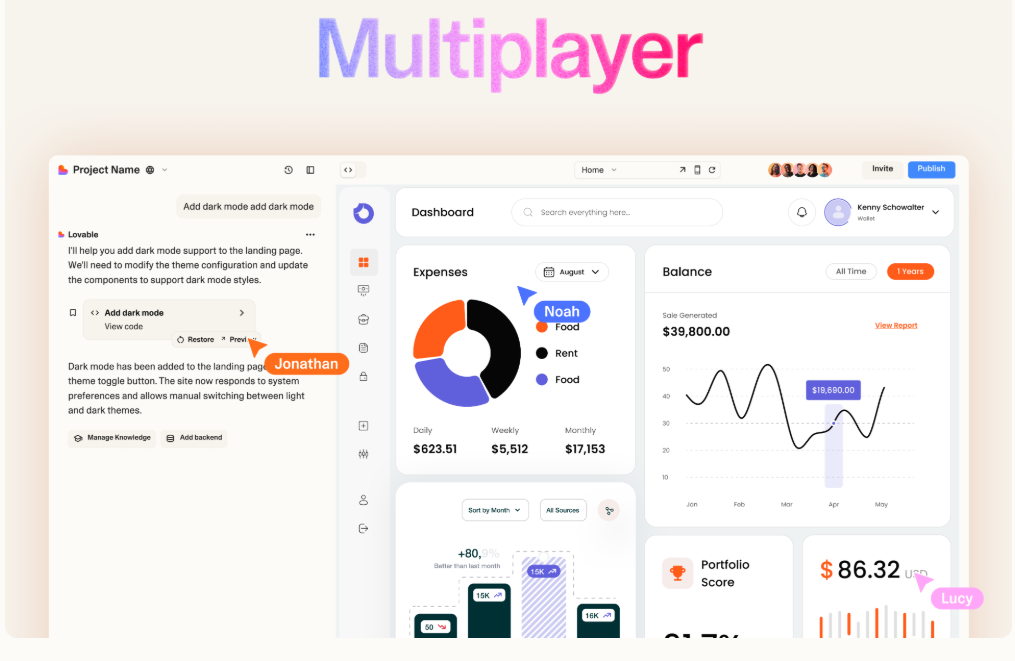
- Real-time collaboration (Multiplayer Workspaces): invite teammates, designers or co-founders, let multiple people contribute, edit, test — all seeing changes live. For a distributed founding team — this is gold.
- Built-in backend, database, and hosting support — with push-button deployment when you’re ready. That removes a major friction point that even many low-code tools don’t solve cleanly.
- Out-of-the-box template and workflow support — from simple landing pages to full CRUD apps, admin dashboards, internal tools, or data collection apps. DESSIGN+1
Lovable 2.0 is no more just for “hello world” demos. It’s trying to deliver real, usable apps — fast.
Who Wins with Lovable 2.0?
For many, this is a game-changer:
Small business owners and founders: Say you run a boutique store. You want a small dashboard to manage orders, track inventory, and send customer emails. Instead of hiring developers (costly and time-consuming), you chat with Lovable: describe the logic, set your fields, and get a working dashboard today.
Designers & non-tech creatives: Got a Figma design for a portfolio site, landing page, or campaign microsite? Lovable can import that design and — poof — turn it into a live, responsive website with working forms. Design + deploy — without backend headaches. Lovable AI Insights+1
Startups & early-stage MVP builders: Early product ideas often die because building an MVP costs real money and time. With Lovable, you can quickly validate the idea, get user feedback, iterate — all before you invest in hiring developers.
Teams working remotely: Because of real-time collaboration and cloud backend support, distributed teams can co-build, test, and launch apps just like a small dev agency — without caring about server setup or dev ops.
What’s Under the Hood - And What Limits Remain
Technically, Lovable builds on modern web stacks (React, TypeScript, Supabase or similar) — which means the apps aren’t just “AI prototypes” stuck in some sandbox. They have real databases, real auth, and real hosting.
But let’s be honest, it’s not magic everywhere. Because it abstracts away complexity, there are trade-offs:
- For simple apps or MVPs, it’s superb. But for complex logic, custom data relations, or highly performance-sensitive applications, the abstraction may limit control. Many developers warn against assuming a Lovable build equals production-ready quality.
- Because many features depend on “AI understanding” your instructions or props, the prompt clarity matters. Vague instructions can lead to buggy UI, miswired logic, or inconsistent behavior.
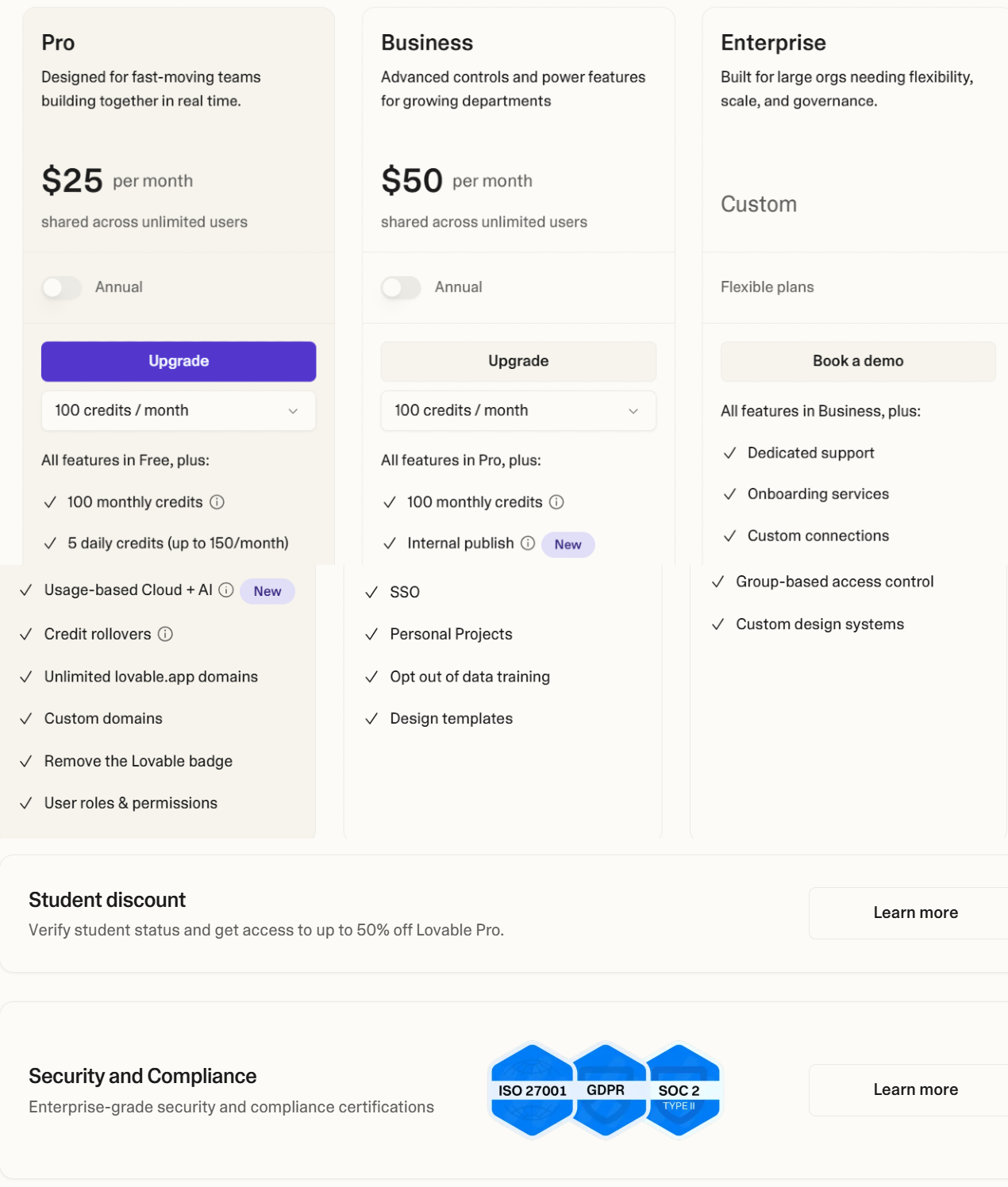
- The “credit-based system” — on free or basic plans — means heavy usage can become costly quickly. For a serious project, you may still need to upgrade or export and port the code somewhere else.
Even so, many reviews and users say that with a bit of patience and the right prompts, they built working prototypes — and sometimes even full apps — in a fraction of the time compared to traditional development.
By 2025, roughly 70% of new applications will be built using low-code or no-code platforms — up from less than 25% in 2020.
What This Means — Not Just for Tools, but for the Future of Building
Lovable 2.0 represents a shift in how we think about building software. Instead of asking “Do I have the developers or budget?”; The question becomes “Do I have the idea?”
If you do, Lovable gives you a shot. It lowers the barrier between idea and execution. It democratizes app-creation. For entrepreneurs, startups, creatives, or anyone with a need to build fast, the risk no longer lies in whether you can code, but whether your idea is strong.
Yes, there are limits. But for many, that’s a trade-off worth making.
And if that’s very, very clear to you, we may be witnessing the start of a “software creation revolution” where code becomes less of a skill and more of a tool. Not everyone needs to be a developer. Sometimes, all you need is a prompt.
See you in our next article!
If this article helped you explore Seedream 4.0, check out our recent stories on MAI-IMAGE 1, Assembly AI, Dialogue AI, and Gumloop AI. Share this with a friend who’s curious about where AI is heading next. Until next brew ☕