NVIDIA COSMOS : AI ROBOT LEARNED HOW THE WORLD WORKS
For the last few years, the AI revolution has lived behind glass.
We’ve watched artificial intelligence write emails, compose poems, generate images, and debug code. It has changed how we think, write, and work. But despite all that intelligence, AI couldn’t do the most basic human things—like folding laundry, picking up a dropped spoon, or stopping a glass from falling off a table.
It could think.
It just couldn’t touch.
That changed at CES 2026.
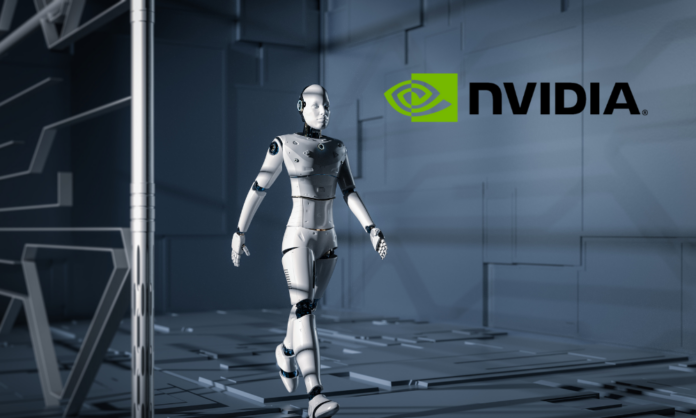
This was the moment when AI stopped being purely digital and started stepping into the physical world. The headline announcement came from NVIDIA, which unveiled Cosmos, a new class of “World Foundation Models” designed specifically for robots.
If ChatGPT was the moment AI learned language, Cosmos is the moment AI learned how the world works.
Robots have existed for decades, but they’ve always come with a frustrating limitation. They are extremely precise, but painfully inflexible.
Take a factory robot. It can weld a car door with perfect accuracy, thousands of times a day. But that precision comes with a catch. The door has to be in exactly the right place. Move it a few inches, and the robot doesn’t adapt. It just keeps welding, even if there’s nothing there.
That’s because traditional robots don’t understand objects. They understand coordinates.
A robot doesn’t know it’s welding a door. It knows it’s moving an arm from point A to point B. There is no awareness of purpose, context, or consequence.
This is why robots struggle outside controlled environments. A living room is not a factory. Toys move. Furniture gets rearranged. Pets walk through paths. To a robot, a pile of laundry isn’t “clothes”—it’s a chaotic obstacle course.
Until now, that messiness was simply too much.
NVIDIA’s Cosmos changes this by introducing something robots have never really had before: a world model.
Unlike earlier AI systems trained mostly on text and static images, Cosmos is trained on massive amounts of video and physical interactions. It learns how objects move, how they collide, how gravity works, and what usually happens next.
The easiest way to understand this is to think about how humans react to everyday situations.
When you see a glass of water near the edge of a table, you don’t wait for it to fall. Your brain instantly runs a simulation. You imagine the glass tipping over, hitting the floor, breaking, and spilling water everywhere. That mental preview is enough for you to reach out and move it.
Cosmos gives robots this same ability.
Before a robot moves, it can internally simulate thousands of possible futures. It can predict what will happen if it nudges an object, reaches too far, or takes the wrong path.
A traditional robot sees a glass and moves forward.
A Physical AI robot sees the glass, predicts that it could fall, and changes its behavior—either avoiding it or stabilizing it before continuing.
This is the difference between reacting and understanding.
This shift has introduced a new term you’ll hear a lot more in 2026: Embodied AI.
ChatGPT is powerful, but it lives on a server. It has no body. Embodied AI places intelligence inside a physical form—humanoid robots, robotic arms, warehouse machines, even home assistants that can move and manipulate objects.
With systems like Cosmos, developers no longer need to program every tiny movement. Instead of telling a robot exactly how to clean a spill, they can give it a goal.
“Clean that spill.”
The robot then figures out the steps on its own. It identifies a cloth, determines where water is, understands how wiping works, and adapts if something goes wrong.
This is a fundamental change. Robots stop being tools that follow scripts and start becoming agents that solve problems.
When ChatGPT launched, it didn’t just improve chatbots. It changed expectations. Suddenly, everyone understood that AI could reason, explain, and adapt in real time.
Physical AI is doing the same thing for robots.
Instead of machines that repeat a single task, we’re moving toward machines that can handle new situations without being retrained from scratch. That means robots in warehouses that can deal with unexpected layouts. Robots in hospitals that can assist staff safely. And eventually, robots in homes that can help with everyday chores.
Not perfectly. Not immediately. But for the first time, the path is clear.
We are moving away from simple automation and toward true autonomy.
The “ChatGPT moment” reshaped how we work with information. The “Physical AI moment” will reshape how we live with machines.
The long-promised helper robot—the one that can load a dishwasher, pick up toys, or help an aging parent—is no longer just a sci-fi character. It’s becoming a product roadmap.
And this time, the intelligence isn’t trapped behind a screen. It’s learning how to exist in the real world.
See you in our next article!
If this article helped you to understand the role of AI in human robots, have a look at our recent stories on Vibe Coding, How to spot Deepfake, The Bedroom Director, GPT Store, Apple AI, and Lovable 2.0. Share this with a friend who’s curious about where AI and the tech industry are heading next.
Until next brew ☕