Perplexity: The Quiet Search Engine That Just Started a War
For nearly twenty years, search barely evolved. We typed keywords into a box, hoping Google’s algorithm would decode our intent. The result was always the same: a stack of blue links, an ad or two masquerading as organic results, and an endless maze of SEO-optimised pages that existed more for algorithms than for humans. Search became noisier, not smarter — a ritual of scanning, clicking, and filtering through clutter.
AI changed that dynamic almost overnight. Instead of links, people began expecting clarity. Instead of browsing multiple websites, they wanted direct answers. Instead of manually researching, they wanted a system that could read the internet for them and deliver concise insights. As the biggest players — OpenAI, Google, and Meta — raced to shape this new landscape with billion-dollar models, a smaller player quietly stepped forward with a very different philosophy.
That player was Perplexity, a startup moving faster than Big Tech’s release cycles, and perhaps redefining what the future of search will look like.
By 2025, Perplexity counts over 22 million monthly users and processes more than 100 million queries every week.
How is Perplexity different you say!
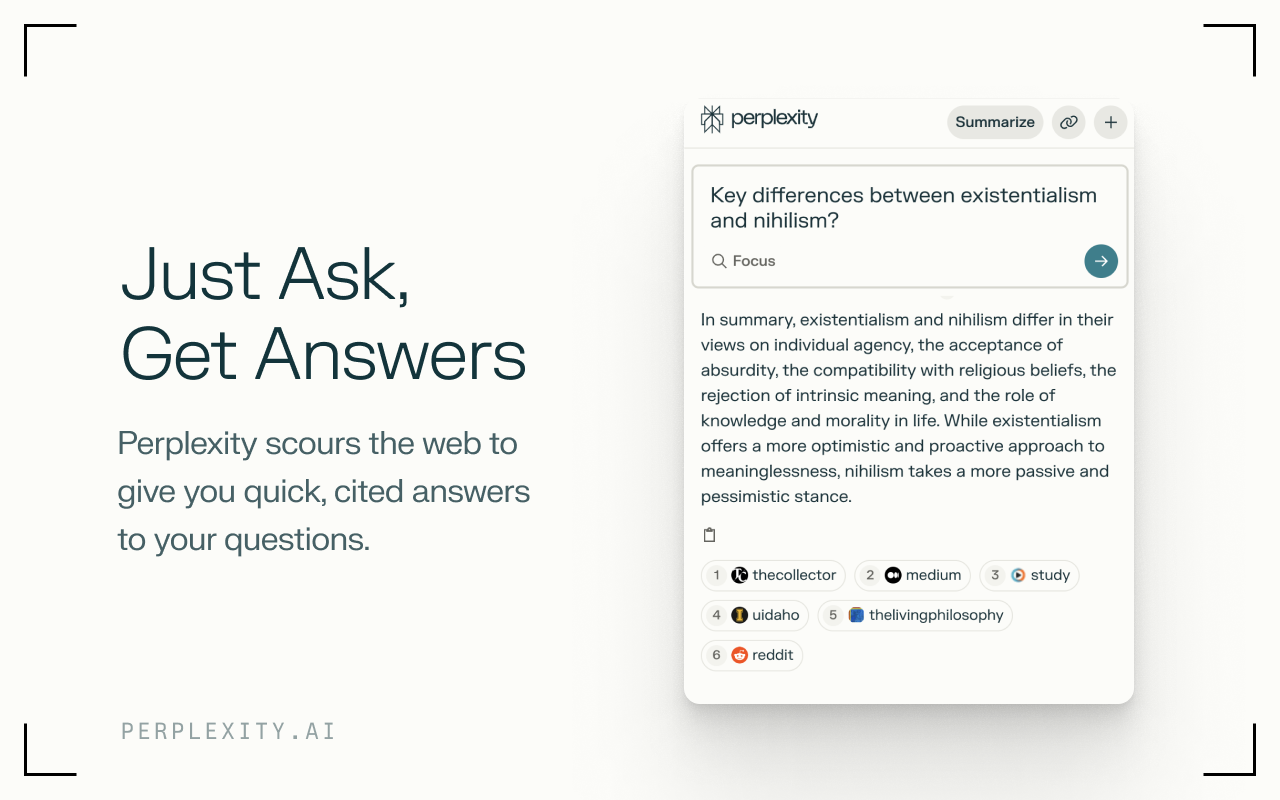
The simplest way to understand Perplexity is to compare it with the systems we already know. Google remains rooted in link-based results. ChatGPT excels at creativity and conversation. Gemini specializes in multimodal reasoning. Perplexity positions itself differently: it aims to deliver verified answers supported by citations, sources, and real-time web access.
If you ask Perplexity, “What’s happening with India’s EV policy this week?”, it doesn’t rely on outdated training data. It scans the latest government releases, news articles, and policy documents, then produces a concise, sourced explanation. Ask for a market roundup, and it behaves like a junior analyst—summarizing earnings reports and financial updates with links for deeper reading. Even a practical query such as “How do I claim GST refund for a canceled business order?” results in a structured, step-by-step answer backed by official references.
Unlike traditional chatbots, Perplexity doesn’t try to “sound” smart. It tries to be right. And that single difference is why researchers, analysts, students, journalists, and founders are gravitating towards it.
Perplexity’s monthly visits jumped from 52 million to nearly 160 million within a single year, marking a 192% surge that few consumer apps have ever achieved.
The other thing that makes Perplexity different from its peers is their business model.
Where Google’s economic engine depends on advertising and SEO-driven traffic, Perplexity runs on a fundamentally different incentive model. It does not show ads, push sponsored results, or reward websites that play SEO games. Instead, it uses a usage-based subscription approach—you pay only for access and queries, not with your attention.
This allows Perplexity to avoid the structural conflicts of interest that hold Google back. Google cannot abandon ads without collapsing its business. OpenAI’s model is subscription-driven and optimized for broad creativity, not real-time fact-first search. Gemini attempts a fusion approach but still struggles with consistent sourcing. Perplexity stands apart by building a search engine that treats accuracy as the product, not a feature.
Alongside its direct subscriptions, Perplexity also earns through enterprise search APIs, B2B licensing, and distribution partnerships, creating a diversified business model that does not depend on link-clicks to survive.
Below is the table comparing the four platforms used as search engines:
| Feature / Aspect | Perplexity | ChatGPT | Google Search | Gemini |
|---|---|---|---|---|
| Core Identity | Research & answer engine | Creative assistant | Link-based search engine | Multimodal AI model |
| Speed of Shipping | Very fast (weekly) | Moderate | Slow | Moderate |
| Accuracy & Citations | Strong citations, real-time | Varies; browsing limited | Dependent on SEO & ranking | Mixed, fewer citations |
| Browsing | Real-time by default | Limited & slower | Web-native but link-heavy | Good reasoning, weaker retrieval |
| Business Model | Subscription + usage | Subscription | Ads | Hybrid |
| Global Partnerships | Airtel, Ronaldo | Enterprise deals | Carriers & hardware OEMs | Limited |
| Strength | Verified answers | Creativity | Coverage & scale | Multimodal reasoning |
| Weakness | Smaller index | Hallucination risk | Ad-driven incentives | Inconsistent sources |
Why Perplexity Is Growing So Fast? Do they have a cushion?
Perplexity’s rapid rise is driven by a philosophy centered on speed, precision, and specialization. It integrates the newest AI models almost immediately—whether it’s GPT-4o, Claude, or Llama—ensuring users always get the best available reasoning engine. While Big Tech announces upgrades months in advance, Perplexity quietly ships them within days.
Its hybrid search architecture blends real-time web retrieval with AI reasoning, making its responses more grounded and up to date. ChatGPT’s browsing is still limited and sometimes inconsistent; Perplexity treats the entire internet as an active information feed.
The platform is also investing in features that feel like a preview of future AI systems. “Copilot Mode,” for instance, can read what’s on your screen and offer context-sensitive assistance without needing explicit prompts. Domain-specific search models for finance, science, and coding ensure that the engine behaves less like a generalist chatbot and more like a team of specialists.
This combination of speed of integration, precision of retrieval, and specialization of reasoning is why Perplexity feels like a research tool rather than a generic AI assistant.
Perplexity isn’t just making moves on innovation of its product, they are finding new ways to distribute their offerings as well.
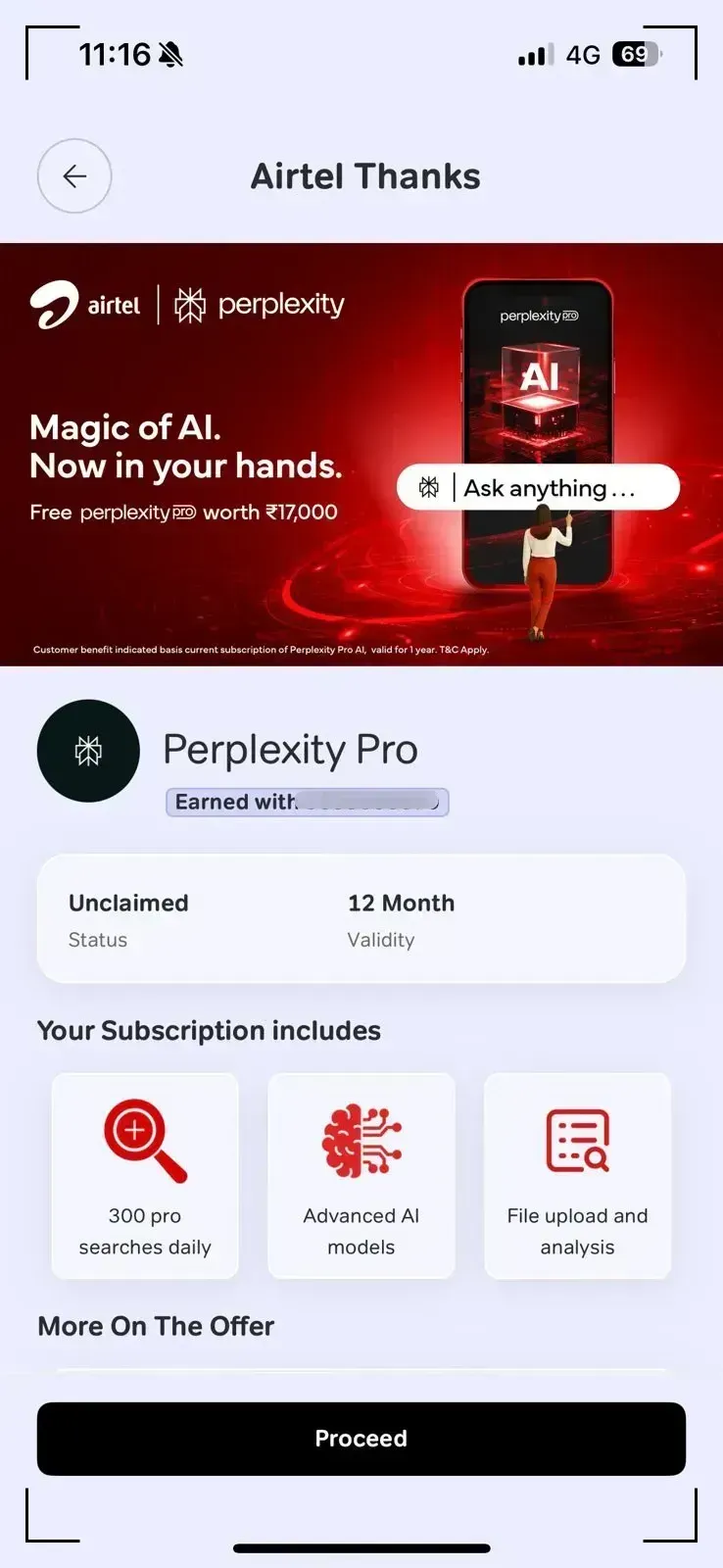
The partnership with Airtel is a watershed moment. By offering Perplexity Pro to millions of Airtel users, the company has unlocked a massive channel for onboarding India’s next generation of AI users. This kind of telecom partnership is rare in the AI world and gives Perplexity a strategic advantage that even OpenAI and Google haven’t tapped into, instant distribution at national scale. More users mean more queries, more data, and ultimately cheaper inference costs.
Then there’s Cristiano Ronaldo. By partnering with one of the world’s most recognizable athletes, Perplexity injected cultural relevance into a product category historically dominated by engineers and researchers. Ronaldo can do for Perplexity what decades of traditional marketing couldn’t. He can make AI search feel mainstream, accessible, and aspirational.

Let's discuss some real use case cases where Perplexity flourishes and outshines others.
Imagine this!
A week before her UPSC prelims, Ananya was drowning.
She had bookmarked 27 articles on India’s upcoming budget. Each was dense, each was slightly conflicting, and together they formed a haze of policy jargon, political noise, and economic debate. Her plan was simple but painful: skim them all, build handwritten notes, cross-verify key numbers, and then condense everything into a five-point summary she could remember.
Except she never got that far.
One evening, exhausted, she typed into Perplexity:
“Summarize all news on India’s budget in 5 points.”
What happened next felt almost unfair.
Perplexity swept through major publications — The Hindu, Financial Express, Mint, Indian Express — read them, compared the narratives, and extracted the most important policy directions. In less than ten seconds, Ananya had a clean set of five points with citations. She clicked through two links to verify the tone, and then copied those five points into her notes.
What would’ve taken her two hours took two minutes.
She wasn’t just saving time; she was saving attention. Instead of “studying the news,” she was focusing on “understanding the news.” Instead of fact-checking scattered articles, she was absorbing core themes.
For a student preparing for high-stakes exams, Perplexity didn’t feel like a shortcut.
It felt like a leveller; the kind of tool that gives clarity when the noise gets overwhelming.
Imagine this now and you will get the gist on how Perplexity is positioned differently from its peers.
On a random rainy Thursday morning in Bangalore, Arjun, founder of a random logistics-tech startup, walked into his investor meeting underprepared.
He had spent the previous night manually scanning Crunchbase profiles, reading old TechCrunch articles, and jumping between LinkedIn pages to understand his competitors. But half the funding data was outdated, and he couldn’t find a single consolidated report that captured the current state of the B2B logistics AI market.
Minutes before the call, he opened Perplexity and typed:
“Show me five competitors in the B2B logistics AI space and their funding history.”
In one sweep, the engine collected live data from Crunchbase, sifted through recent funding news from Entrackr and YourStory, and cross-checked the companies’ latest press releases. Then it stitched everything together into a short, structured report.
- Competitor names
- Their last funding round
- Total money raised
- What markets they operate in
- Their edge (AI routing, warehouse optimization, last-mile automation, etc.)
Arjun didn’t just get names and numbers.
He got context. Who raised what, when, and why it mattered for the market.
By the time the investor call began, he wasn’t scrambling.
He was leading the conversation.
Perplexity handled the grunt work.
He focused on the strategy.
For founders, time is currency.
Perplexity let him spend that currency where it actually matters — on decisioning, not manual research.
A majority of Perplexity’s users fall between 18 and 34 years old, signalling that the next generation has already chosen its preferred search companion.
What's the Future holds for Perplexity then?
The AI search market is quietly becoming the next billion-dollar frontier. Whoever controls the interface between people and knowledge controls distribution, commerce, discovery, and the future of the web. For the first time in decades, Google is not the only serious player shaping this market.
Telecom partnerships give Perplexity immediate scale.
Celebrity collaborations give it cultural recognition.
Usage-based economics align it with user interests.
Real-time AI retrieval gives it an accuracy edge.
And rapid shipping gives it a momentum Big Tech struggles to match.
If this trajectory holds, the next global search engine might not emerge from Silicon Valley’s biggest companies. It may come from a start-up that simply answers better and faster and is accountable.
See you in our next article!
If this article helped you understand Perplexity, check out our recent stories on AI Wearable Boom, GPT Store, Apple AI, Runway AI and Lovable 2.0 . Share this with a friend who’s curious about where AI is heading next. Until next brew☕