Shopping 2.0: Why "Searching" for Products is Obsolete
Welcome back to AI Brews.
Let’s start with a familiar situation.
You want to buy a new coffee maker. Not a fancy one. Just something reliable. You open Amazon to check prices. Then you open YouTube to see a few reviews. Then, Reddit, because people there usually tell the truth. Then, a comparison article that claims to list “the best coffee makers of 2026.”
After 30 minutes, you have more than a dozen tabs open. Every product looks similar. Reviews contradict each other. One person says it broke in a month, another says it has worked perfectly for years. You still haven’t bought anything, and now you’re tired.
This is not because you are bad at shopping. This is because online shopping was designed for searching, not deciding.
This has been the trend so far. For the last two decades, the internet has been excellent at giving us options. Type a product name, and you instantly get thousands of results. What it has never been good at is helping you choose between them.
When you search on Google or Amazon, you are forced to do all the work yourself. You read reviews, compare specs, watch videos, and try to filter out sponsored content. In other words, you become the analyst.
This mental overload is called search fatigue. It happens when too many options and too much information make decision-making harder instead of easier. That is why many people either delay purchases or buy something simply to end the process.
Shopping 2.0 is designed to fix this exact problem.
We are noticing a big shift in the manner of shoppers. The most important change is not better search results. It is the shift from keyword searching to natural conversations.
Think of it like this.
Earlier, shopping online was like walking through a large supermarket without any help. You walked aisle after aisle, reading labels and comparing prices on your own.
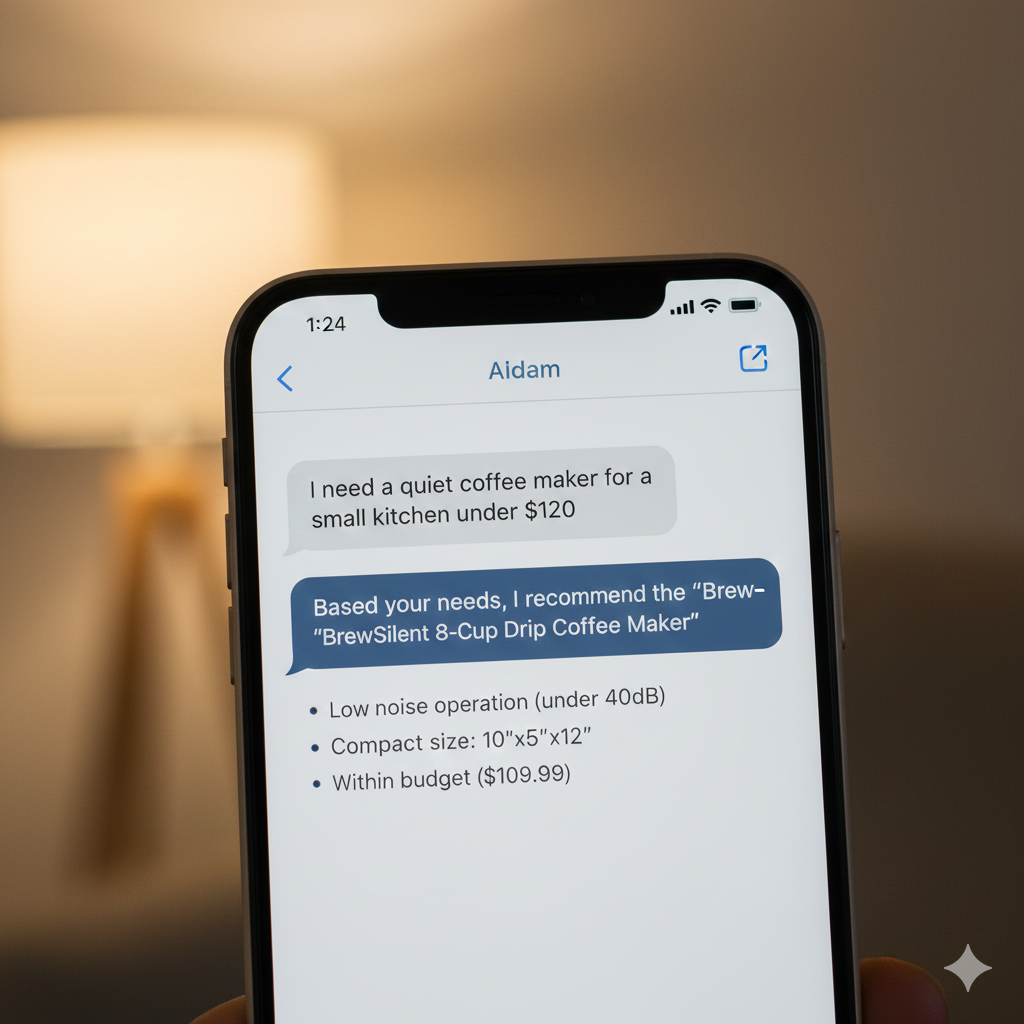
Now, it is starting to feel more like talking to a knowledgeable store assistant. You explain what you need, what your limits are, and what you care about. The system then does the research for you.
Instead of typing “coffee maker,” you can now say:
- “I want a quiet coffee maker for a small kitchen.”
- “It should be easy to clean.”
- “My budget is under ₹10,000.”
The AI understands these conditions and filters products based on them. You are no longer browsing everything. You are only shown what fits your situation.
This change is already happening inside some popular tools. Let’s look at how people are actually using them.
Amazon Rufus
Rufus is Amazon’s built-in shopping assistant. Many people overlook it, but it solves a real problem.
Example:
Imagine you are buying a vacuum cleaner. Instead of scrolling through hundreds of reviews, you ask Rufus:
“Is this vacuum good for homes with pets?”
Rufus reads thousands of reviews and questions in seconds. It then responds with a summary like:
“Customers say it works well for pet hair on carpets, but several mention it struggles on hardwood floors and is louder than expected.”
This answer gives you the real trade-offs immediately. You don’t need to guess or read for half an hour. You can decide whether those compromises work for you.
Perplexity Pro
Perplexity is useful when you don’t know which product to buy at all.
Example:
You ask:
“Suggest good running shoes for flat feet that can also be worn casually.”
Perplexity searches beyond shopping websites. It reads Reddit discussions, expert blogs, and YouTube reviews. Then it suggests one or two specific models and explains why they are suitable.
For example, it might tell you that runners with flat feet prefer a certain shoe because of arch support, and that reviewers also mention it looks good with everyday clothes.
For paid users, Perplexity even allows you to buy directly without visiting multiple websites. Research and purchase happen in the same place.
Microsoft Copilot
Copilot focuses on prices and deals.
Example:
You want to buy noise-cancelling headphones. You already know the model.
You ask Copilot:
“Find the lowest price for Sony XM5 headphones.”
Copilot checks multiple online stores at once, applies available discount codes, and shows you where you can save money. Instead of opening five websites, you get a clear answer in seconds.
This is especially useful during sales, when prices change frequently.
This shift not only affects shoppers. It also changes how companies need to present their products.
For many years, businesses focused on SEO, which means ranking higher in search results using keywords and ads. In Shopping 2.0, this is no longer enough.
Now, products are judged by AI agents, not humans.
These agents look for clear, structured information. They want exact dimensions, materials, noise levels, battery life, and compatibility details.
Example:
If a customer asks for “a desk under 40 inches wide” and your product page only says “compact design,” the AI cannot verify it. As a result, it may not recommend your product at all.
The same applies to reviews. AI systems read review text carefully. If many customers mention a repeated issue, such as poor packaging or slow delivery, the AI will include that in its recommendation.
This means businesses can no longer hide weaknesses behind good marketing.
Shopping 2.0 is revolutionary in many ways!
For consumers, this new system saves time and reduces stress. You no longer have to become an expert before buying something.
For businesses, it raises the bar. Clear information, honest reviews, and consistent quality matter more than catchy slogans.
Shopping is slowly moving from endless browsing to focused conversations. Instead of scrolling through dozens of options, you explain what you need and let the system narrow it down.
That is why Shopping 2.0 feels less tiring and more human.
The next time you need to buy something, try asking a question instead of opening another tab.
See you in our next article!
If this article helped you to change the way you do shopping, have a look at our recent stories on Vibe Coding, How to spot Deepfake, The Bedroom Director, GPT Store, Apple AI, and Lovable 2.0. Share this with a friend who’s curious about where AI and the tech industry are heading next.
Until next brew ☕