The “Bedroom Director” Era: How to Make Hollywood Videos on Your Laptop
Welcome back to AI Brews.
For most of modern history, video creation followed a familiar hierarchy. Big studios made movies. Mid-sized teams made commercials. Individual creators made do with whatever camera they could afford.
The distance between an idea and a finished video was filled with logistics—equipment rentals, lighting setups, shooting schedules, editing timelines, and budgets that grew with every extra take.
What has quietly changed over the last two years is not just how videos are made, but who gets to make them in the first place.
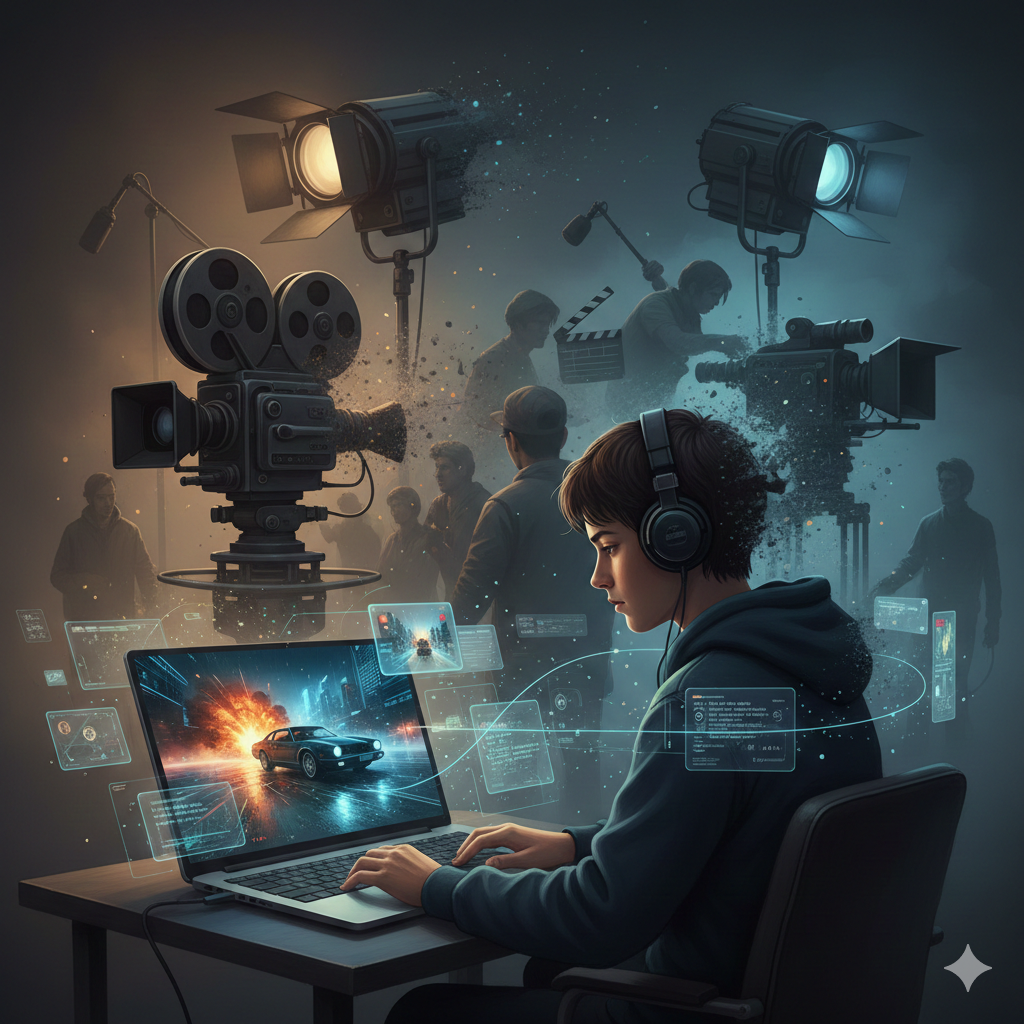
By 2026, we’ve entered what feels like a new creative phase. A solo creator, sitting in a bedroom with a laptop, can now produce video that would have required a full production crew just a few years ago. Not by filming scenes, but by describing them.
This is what the Bedroom Director era really means: the camera is no longer the starting point. Language is.
To understand why this shift matters, it helps to step away from the hype and look at what these tools are actually doing.
Models like Sora, Veo, and Runway have been trained on enormous amounts of video. Over time, they’ve learned visual patterns—how people move through space, how light changes during the day, how rain interacts with surfaces, and how different camera angles are typically used in storytelling.
When a creator types a prompt describing a scene, the model isn’t pulling footage from a database. It is generating a new sequence frame by frame, predicting what should logically appear next based on everything it has learned.
That’s why the output feels cinematic rather than stitched together. The AI is not editing reality; it’s constructing a new one.
The most interesting part of this shift isn’t what the tools can do, but how creators are choosing to use them.
Take YouTube creators, for example. Many of them still shoot talking-head videos at home, but they now use AI-generated footage for intros, transitions, and scene-setting. Instead of relying on stock footage that thousands of other channels also use, they generate custom visuals that match the exact tone of their content.
A tech reviewer might open a video with a dramatic AI-generated shot of a futuristic city to set the mood for a discussion about AI chips. A history channel can visualize ancient cities or events without using low-quality illustrations. The main footage remains human, but the surrounding visuals elevate the production value significantly.
On Instagram and TikTok, creators are using these tools to produce short cinematic clips that would be impossible to film practically. A solo creator promoting a travel brand can generate sweeping drone shots of mountains or coastal towns without ever leaving their room. A small business selling skincare products can create high-end product visuals—slow-motion liquid pours, soft lighting, luxury textures—without hiring a photographer or renting studio space.
What stands out is that creators aren’t replacing themselves. They’re replacing the parts of production that used to be expensive, time-consuming, or simply out of reach.
While many platforms exist, three tools dominate serious creator workflows in 2026.
OpenAI’s Sora is usually chosen when realism matters most. It excels at understanding physical interactions, which makes its output feel grounded. This is why creators lean on it for cinematic storytelling, brand videos, and scenes that need to look believable rather than stylized.
Runway Gen-3 has become popular among creators who want control. Instead of writing one prompt and hoping for the best, Runway allows creators to guide motion, adjust scenes, and experiment iteratively. It fits well into creative workflows where the creator wants to “direct” the AI rather than accept a single output.
Google Veo, on the other hand, wins on speed and integration. Because it plugs directly into YouTube and Google’s ecosystem, it’s often used for quick background generation, Shorts content, and extending clips without complex editing.
Each tool serves a slightly different creative personality, but they all share the same foundation: reducing the cost of turning imagination into video.
Behind the creative excitement is a very real business shift.
Traditional video production is expensive because labor scales linearly. More scenes mean more shooting. More revisions mean more cost. AI-generated video breaks that relationship.
Most of these tools operate on subscription-based pricing. Monthly plans typically range from what a freelancer might spend on editing software to what a small team might budget for content production. For creators and businesses, the math is straightforward: one AI subscription can replace multiple shoots, editors, and reshoots over time.
This is why startups, agencies, and even large companies are experimenting with these tools. Training videos, marketing clips, product explainers, and internal presentations can now be created faster and updated instantly without re-recording.
Instead of thinking in terms of “projects,” teams are starting to think in terms of “iterations.” Content becomes easier to test, revise, and localize.
Despite all this progress, these tools are not flawless.
Hands and faces can still behave strangely. Background text may appear distorted. Occasionally, scenes follow dream logic instead of real-world rules.
Most creators have learned to work around this by treating AI-generated video like raw footage. They regenerate problematic scenes, edit around glitches, and combine AI clips with real footage when needed.
The technology removes friction, but it doesn’t remove judgment. Taste and storytelling still matter.
At its core, this shift isn’t about replacing filmmakers or creators. It’s about lowering the cost of experimentation.
For the first time, video creation is constrained less by tools and more by imagination. The person with the clearest idea—and the ability to describe it—has the advantage.
The camera was used to decide who could participate. Now, language does.
And that may be the biggest creative change of all.
See you in our next article!
If this article helped you understand how you can be at two places at once, do have a look at our recent stories on Smart & Slow AI, Gen Z's new obsession, Perplexity's dominance, GPT Store, Apple AI, and Lovable 2.0. Share this with a friend who’s curious about where AI and the tech industry are heading next.
Until next brew ☕