The CEO’s Secret: How to "Clone" Yourself for Work
Welcome back to AI Brews.
Every senior leader eventually runs into the same constraint.
Not talent. Not ambition. Just time.
A CEO might start the day with a board call, move into a customer meeting, approve budgets, review hiring decisions, and still be expected to record internal updates or onboarding videos for teams across different countries.
The problem is not effort.
The problem is presence.
You can only speak to one room at a time.
In 2026, companies are starting to solve this in an unusual way. Not by hiring more assistants or adding more meetings, but by creating digital versions of their leaders that handle communication at scale.
This idea is called a Digital Twin. And one of the companies quietly enabling it inside large organisations is Synthesia.
There are many AI avatar tools available today. Some are built for creators, influencers, or marketing experiments. They are good at short videos and quick visual effects.
Synthesia was built for a different audience.
Large companies care about very specific things: data security, access control, compliance, and consistency. They want tools that can be used across teams without creating risk.
This is where Synthesia stands out.
According to the company, more than 55% of Fortune 100 companies use Synthesia for internal communication, training, and sales enablement. These companies are not experimenting casually. They are replacing traditional video workflows.
The reason is simple: recording professional videos at scale is expensive, slow, and hard to maintain. Synthesia turns video creation into something closer to document editing.
The most important feature in Synthesia is the Personal Avatar.
This is not a cartoon. It is not an animation. It is a realistic video model trained on your face and voice.
Once created, this avatar can deliver any script you write, in any supported language, without you needing to be on camera again.
How the Process Works
The setup is intentionally simple.
You record yourself speaking for a few minutes using a webcam or phone. The goal is to capture how you naturally talk, move your lips, and express yourself.
Then comes an important step: explicit consent. You must record a statement confirming that you authorize the creation of your avatar. Without this, Synthesia will not proceed. This requirement exists to prevent misuse and deepfakes.
After processing, which usually takes about a day, your avatar becomes available in your account. From that point onward, you can generate videos just by typing text.
Early AI avatars had a problem. They looked stiff and unnatural. People noticed immediately that something was off.
Recent improvements have changed this.
Synthesia’s newer models are trained to understand tone and emotion. When the script is serious, the avatar reflects that. When the message is positive, the expressions adjust accordingly.
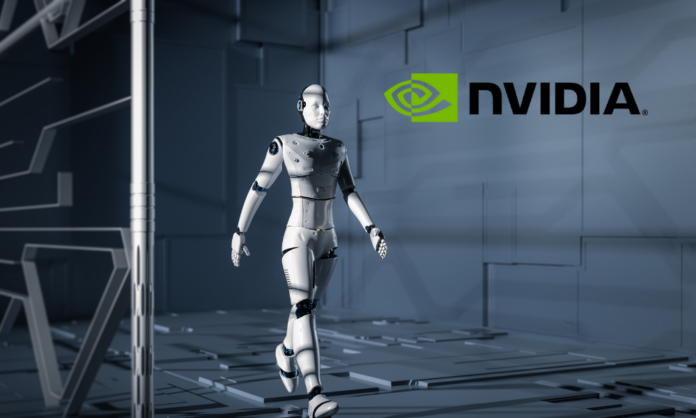
In addition, avatars are no longer fixed in place. You can now generate videos where the avatar walks, gestures, or interacts with a virtual environment. This makes the content feel closer to real human communication, especially in training and presentation settings.
This technology becomes meaningful when it solves real problems.
1. Global Communication Without Repeating Yourself
Consider a company with employees in five countries. Traditionally, leaders either record multiple versions of the same message or rely on subtitles.
With a digital twin, one message can be delivered in multiple languages while keeping the same face, tone, and clarity. This reduces misinterpretation and creates a more personal connection with global teams.
Training videos are expensive to maintain. Any policy change requires re-recording, editing, and approvals.
With Synthesia, the video is driven by text. When the policy changes, the script changes. The avatar updates automatically.
Companies report significant time savings here, especially in HR, compliance, and onboarding.
Sales teams often struggle to balance personalization with scale.
By using templates and variables, teams can generate hundreds of personalized videos without recording each one manually. The message feels personal, but the effort is minimal.
This approach has shown higher engagement rates compared to generic email outreach, particularly in enterprise sales.
A digital version of a person raises valid concerns.
Synthesia addresses this with strict safeguards:
- Avatars cannot be created without explicit consent
- Public figures and celebrities are restricted
- Content moderation is enforced
- Enterprises retain control over who can create and publish videos
This focus on governance is one reason regulated industries—finance, healthcare, and large enterprises—are comfortable adopting the tool.
The point of cloning yourself is not to replace yourself as a leader. It is to remove repetition.
Leaders still decide what to say. They still set direction.
But they no longer need to repeat the same message dozens of times on camera.
Communication becomes scalable.
Presence becomes distributed.
And once that happens, time returns to where it matters most: thinking, deciding, and leading.
That is the real promise behind digital twins — not novelty, but leverage.
See you in our next article!
If this article helped you understand how you can be at two places at once, do have a look at our recent stories on Smart & Slow AI, Gen Z's new obsession, Perplexity's dominance, GPT Store, Apple AI, and Lovable 2.0. Share this with a friend who’s curious about where AI and the tech industry are heading next.
Until next brew ☕